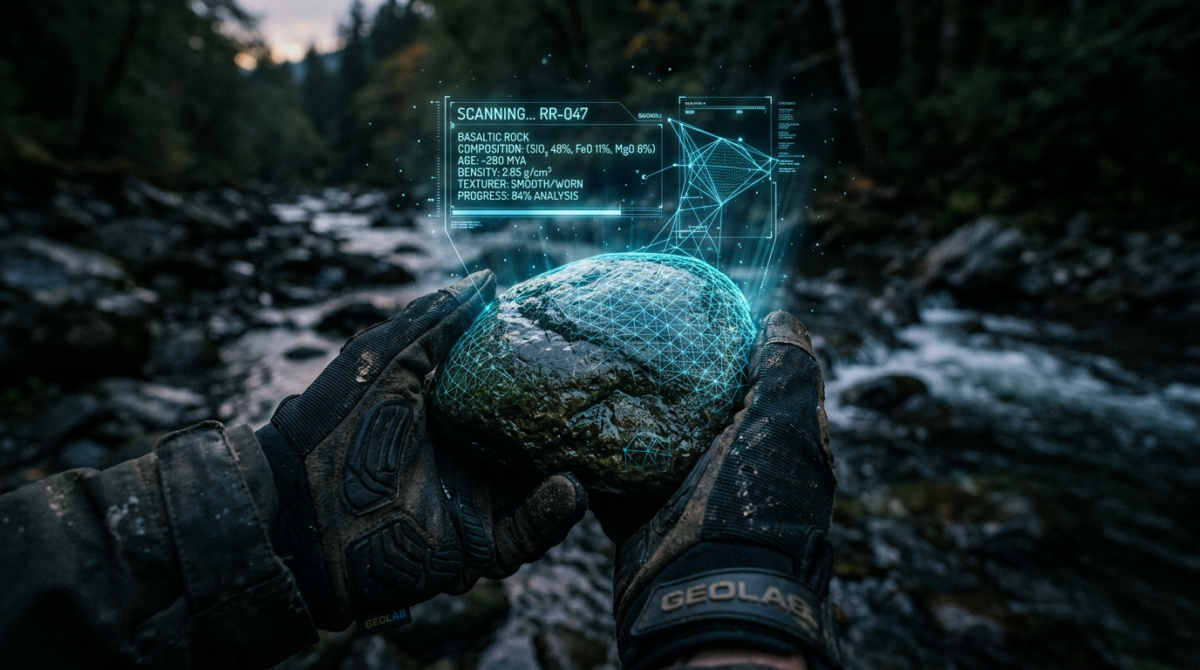
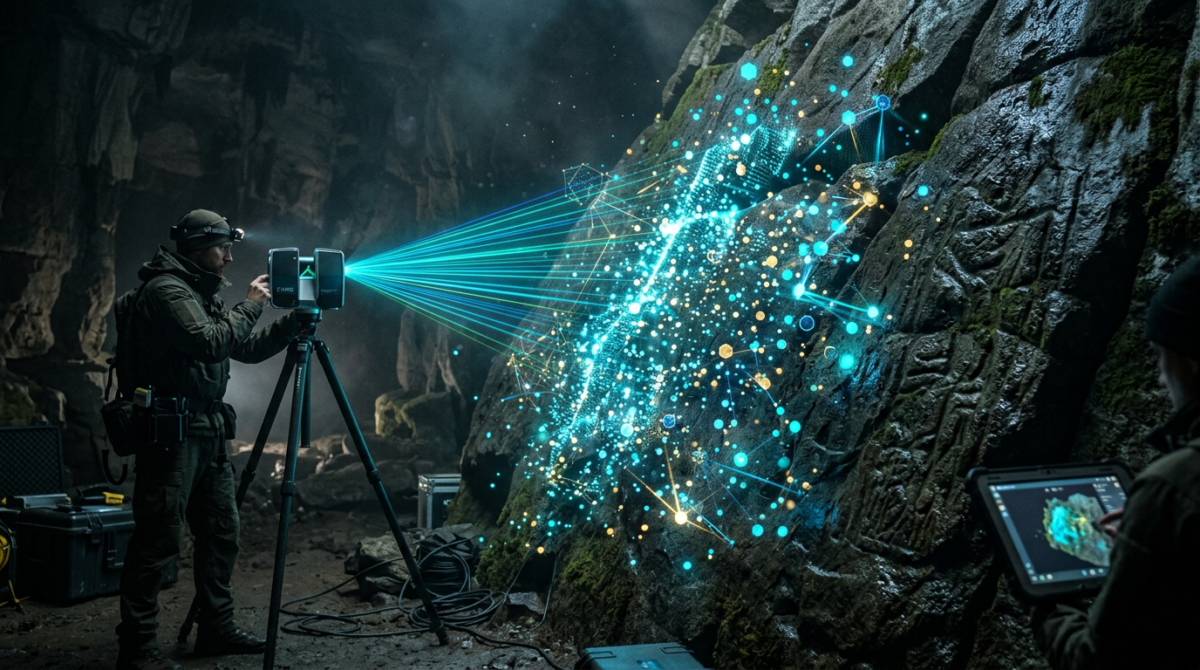
The Backyard Quarry, Part 5: Digital Twins for Physical Objects

At this point in the Backyard Quarry project, something subtle has happened.

We started with a pile of rocks.

We now have:

  • a schema
  • a capture process
  • stored images
  • searchable metadata
  • classification
  • lifecycle states

Each rock has a record.

Each record represents something in the physical world.

And that leads to a useful observation.

We’re no longer just cataloging rocks.

We’re building digital representations of them.

What Is a Digital Twin?

In simple terms, a digital twin is:

A structured digital representation of a physical object.

That representation can include:

  • identity
  • properties
  • visual data
  • state
  • history

In the context of the Quarry, a rock’s digital twin might look like:

rock_id: QRY-042
weight_lb: 12.3
dimensions_cm: 18 x 10 x 7
color: gray
rock_type: granite
status: for_sale
images: [rock_042_1.jpg, rock_042_2.jpg]
model: rock_042.obj

It’s not the rock itself.

But it’s a useful abstraction of it.

More Than Just Metadata

At first glance, a digital twin might look like a simple database record.

But there’s an important difference.

A well-designed digital twin combines multiple types of data:

  • structured metadata (easy to query)
  • unstructured assets (images, models)
  • derived attributes (classification, embeddings)
  • state over time

It’s not just describing the object.

It’s enabling interaction with it through software.

The Time Dimension

One of the most important aspects of a digital twin is that it can change over time.

Even a rock — which is about as static as objects get — has a lifecycle in the system:

collected → cataloged → listed_for_sale → sold

Each transition adds context.

Now we’re not just storing a snapshot.

We’re tracking a history.

This becomes much more important in other domains.

Where This Shows Up

The interesting part is that this pattern isn’t unique to rocks.

It appears in many different systems.

Manufacturing

  • digital twins of machine parts
  • tracking condition and usage
  • linking physical components to system data

Museums and Archives

  • artifacts with metadata, images, provenance
  • digitized collections
  • searchable historical records

Agriculture

  • crops tracked over time
  • environmental data
  • growth and yield metrics

Healthcare and Motion

  • human movement captured as data
  • gait analysis
  • rehabilitation tracking

This last one starts to look a lot like something else entirely.

From Objects to Systems

What the Backyard Quarry demonstrates, in a small way, is that once you:

  • represent objects as data
  • capture their properties
  • store and index them

you’ve created the foundation for a larger system.

The digital twin becomes a building block.

And systems are built from collections of these building blocks.

The Abstraction Layer

A useful way to think about digital twins is as an abstraction layer.

They sit between:
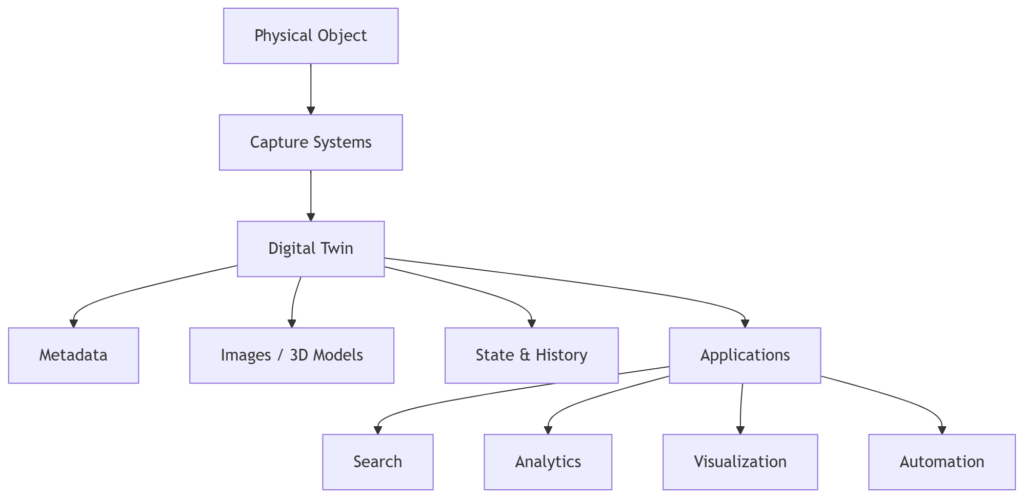
Diagram showing how physical objects are captured and represented as digital twins with metadata, assets, and application layers.
Digital twins act as a bridge between physical objects and software systems.

Applications don’t interact with rocks directly.

They interact with the representation of rocks.

That layer enables:

  • search
  • analytics
  • visualization
  • automation

Without it, everything remains manual and unstructured.

The Limits of the Model

Of course, digital twins are not perfect representations.

They are approximations.

Some properties are easy to capture.

Others are difficult or impossible.

Even in the Quarry:

  • weight is approximate
  • dimensions are imprecise
  • visual data depends on lighting
  • 3D models may be incomplete

The goal isn’t perfect fidelity.

It’s usefulness.

The Real Insight

At this point, the Backyard Quarry starts to feel less like a joke and more like a small version of a much larger idea.

Many modern systems are built around digital twins.

Not because the concept is new.

But because we now have the tools to make it practical:

  • cheap sensors
  • high-resolution cameras
  • scalable storage
  • machine learning

The pattern has existed for a long time.

The difference is that we can now implement it at scale.

What Comes Next

So far, the Quarry system works at a small scale.

A handful of rocks.

A manageable dataset.

But what happens when the number of objects grows?

When the dataset becomes:

  • hundreds
  • thousands
  • or millions

The next post explores that question.

Because designing a system for a small dataset is one thing.

Designing a system that scales is something else entirely.

And somewhere along the way, it becomes clear that a pile of rocks is enough to illustrate ideas that show up across entire industries.

Yet another surprise in this Backyard Quarry journey.

The Rock Quarry Series

Facebooktwitterredditlinkedinmail

The Backyard Quarry: Turning Rocks Into Data

Another round of tech layoffs rolled through the industry recently, and I was one of the people caught in it.

If you’ve worked in tech for any length of time, you know the routine that follows. Update the résumé. Reach out to contacts. Scroll job boards. Try to figure out which technologies the market is currently excited about and which ones have quietly drifted into irrelevance.

After a few days of that cycle, I found myself spending more time outside than in front of a laptop.

One afternoon, walking around the yard, I noticed something interesting.

My backyard contains a surprisingly large dataset.

Rocks.

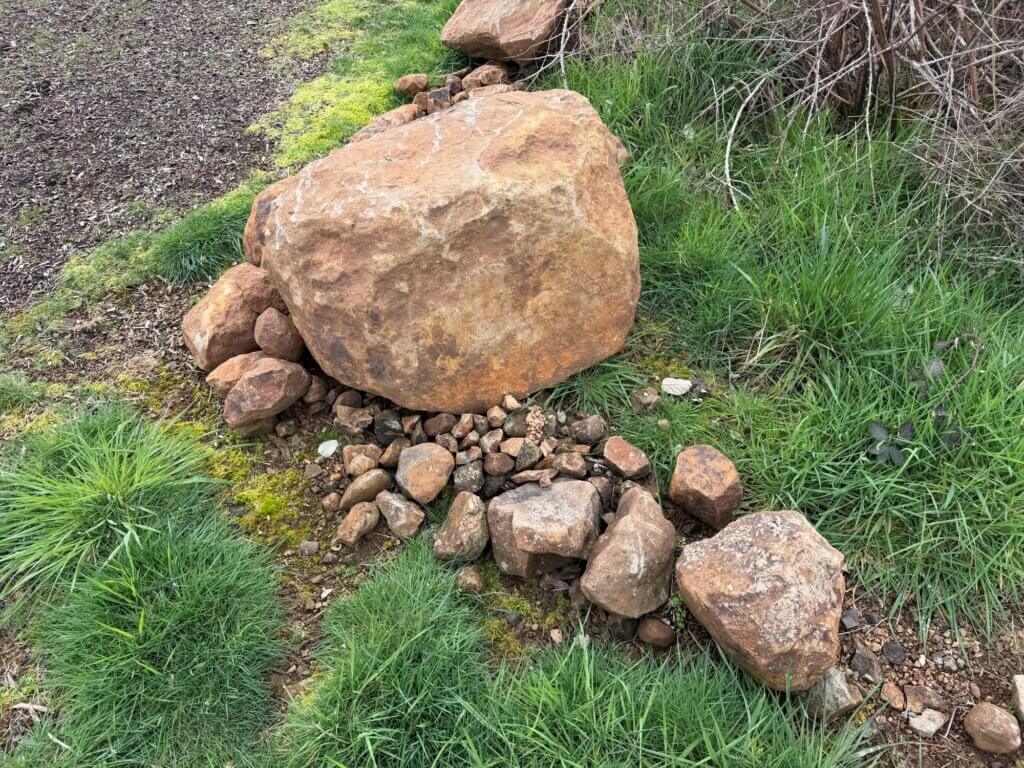
Pile of Rocks
Sample of the rocks from the Backyard Quarry used for the dataset.

Lots of rocks.

Some are the size of peas. Others are roughly the size of a car engine. A few fall somewhere in the unsettling range between “wheelbarrow recommended” and “this probably requires heavy machinery.”

Naturally, I had the same thought many people eventually have when staring at a large pile of rocks:

I could probably sell these.

A small stand near the road. A few piles sorted by size. Maybe a sign that says “Landscaping Rock.” It’s not exactly a venture-backed startup, but stranger side businesses have existed.

Unfortunately, engineers have a well-known weakness.

We rarely do things the simple way.

If I was going to sell rocks, I wasn’t just going to pile them on a table.

I was going to build a system.

The Dataset

The moment you start thinking about the rocks as inventory, a familiar set of questions appears.

How many rocks are there?

What kinds?

Which ones are small decorative stones and which ones fall firmly into what I’ve started calling Engine Block Class?

Like many real-world datasets, this one has significant variability.

Some objects are a few grams. Others weigh enough to require careful lifting technique and a brief internal conversation about life choices.

At a glance, the dataset looks chaotic. But underneath the chaos are patterns.

Different sizes. Different shapes. Different colors. Different geological types. Some rocks are smooth river stones. Others are jagged fragments that look like they escaped from a small landslide.

If you squint a little, you start to see the outlines of something familiar to anyone who works with data systems.

A collection of physical objects that could be represented as structured records.

The Engineer’s Curse

In theory, selling rocks is simple.

  • Step one: collect rocks.
  • Step two: put them in a pile.
  • Step three: wait for someone to stop their car and decide they want landscaping material.

But once you start thinking about it from an engineering perspective, the questions multiply.

Should each rock have an identifier?

Should there be photographs?

Should the system track weight or dimensions?

What about classification?

It’s probably useful to distinguish between Pebble Class rocks and Wheelbarrow Class rocks.

And what about the really large ones — the ones that are clearly in the Engine Block Class, which itself appears to span everything from motorcycle engine scale to something closer to a semi-truck.

Once you start thinking about these questions, the simple rock pile begins to look like something else entirely.

A catalog.

A dataset.

A system waiting to happen.

From Rocks to Records

What if every rock had a record?

Something simple at first.

An identifier. A few attributes. Maybe a photo.

Conceptually, it might look like this:

rock_id
weight
dimensions
color
rock_type
location_found
status

Each rock in the yard becomes a digital object — a structured record representing something in the physical world.

In other words, each rock now has a digital twin.

That might sound slightly ridiculous in the context of landscaping stones, but the idea is surprisingly powerful.

Across many industries, organizations are trying to solve exactly this problem: how to connect messy physical reality with structured digital systems.

Manufacturers track machine parts.

Museums catalog artifacts.

Farmers track crops.

Logistics companies track inventory moving through warehouses.

In each case, the challenge is similar.

A physical object exists somewhere in the world.

We want to represent it in a way that software systems can understand.

The Backyard Quarry

At this point the rock pile had acquired a new name.

The Backyard Quarry.

Partly as a joke, and partly because it captured the spirit of the project. What started as a casual observation had turned into a small experiment in data modeling, object cataloging, and system design.

The dataset might be small.

The objects might be rocks.

But the underlying questions are surprisingly rich.

How do you represent physical objects in software?

How do you capture information about them?

How do you search and organize the resulting data?

And how do these systems scale when the number of objects grows from a few dozen to thousands — or millions?

What Comes Next

Over the next few posts in this series, I’m going to explore those questions by building a small system around the Backyard Quarry.

We’ll look at things like:

  • designing a schema for physical objects
  • capturing images and measurements
  • generating 3D models using photogrammetry
  • building ingestion pipelines
  • indexing and searching the dataset

All starting from a simple collection of rocks.

The world has no shortage of complicated engineering problems.

Sometimes the best place to explore them is somewhere simpler.

Like a pile of rocks in the backyard.

And if you happen to need a carefully documented specimen from the Backyard Quarry, inventory is currently available.

Shipping, however, may exceed the value of the rock itself.

Facebooktwitterredditlinkedinmail