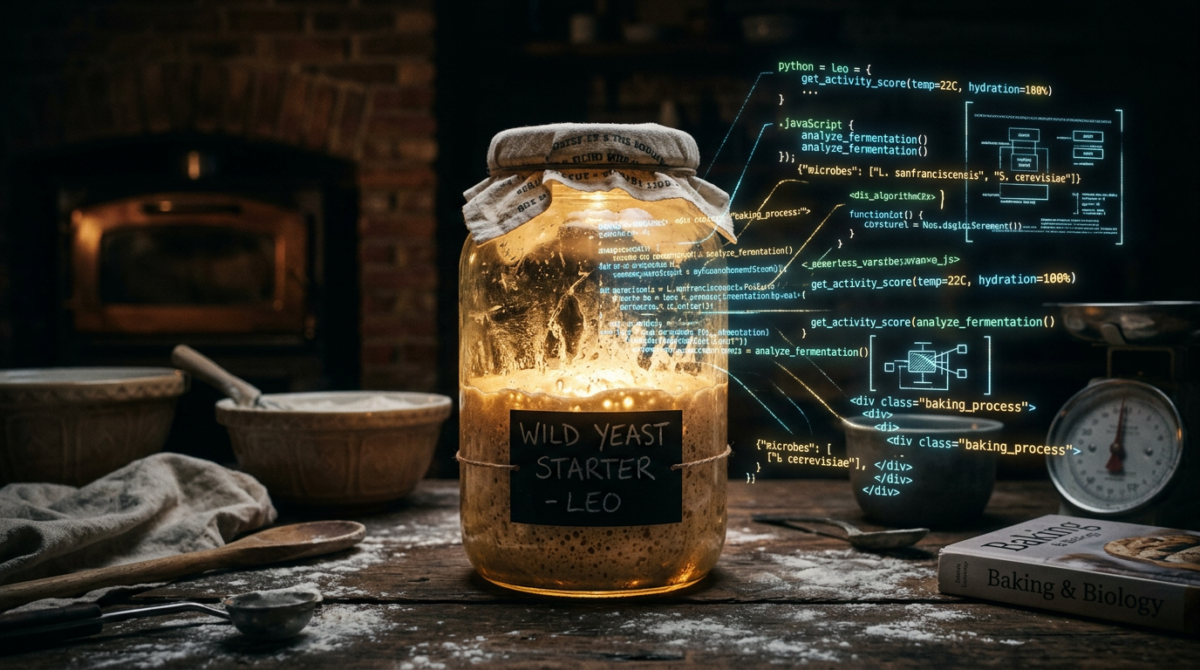
Expanding the Sovereign AI Stack: Moving the Specification from Gateway to Local Silicon

When I first introduced the Sovereign Systems Specification and released the initial foundation of the SDK, sovereign-core and its accompanying sovereign-fastapi integration layer (see announcement post here), the goal was simple but ambitious: establish a secure, deterministic cryptographic checkpoint at the network ingestion boundary.

sovereign-core gave local infrastructure a way to anchor identity and validate incoming payloads, while sovereign-fastapi provided the high-performance middleware necessary to drop those security primitives cleanly into production web runtimes.

But a secure gateway is only half the battle. As autonomous agents and LLM orchestrators evolve into core enterprise infrastructure, data has to travel deeper into the local topology. It moves across processing loops, through token-minimization filters, and down into persistent storage. If that data isn’t armored at every single rest stop, your “sovereign” system still inherits massive operational liabilities.

To move the ecosystem down the road and secure the entire data lifecycle, I am excited to announce the release of the next two core workspace components of the Sovereign SDK: sovereign-sieve and sovereign-ledger.

Together, they transition the stack from a server-side perimeter proxy into a complete, end-to-end local data engineering pipeline.

1. sovereign-sieve — Slicing the Prose Tax

Before data can be securely audited, it needs to be optimized. Right now, production AI implementations are burning up to 30% of their cloud compute budgets on what I call the Prose Tax.

sovereign-sieve is an ultra-lightweight, zero-dependency utility that implements our Sieve-and-Sign Pattern.

Instead of routing raw conversational noise directly to downstream agents or databases, sovereign-sieve runs an algorithmic parsing engine locally to clean text streams, isolate underlying data schemas, and strip out fluff. By minimizing your token footprint and context window pressure on local silicon before crossing the ingestion boundary, it turns AI data flow from an unpredictable economic drain into a metered, optimized utility.

  • Registry: pip install sovereign-sieve
  • Status: Active & Distributed

2. sovereign-ledger — The Immutable Data Vault

Once data has been sieved by the edge and signed by sovereign-core, it requires an un-falsifiable record of custody. Standard application logging is notoriously fragile—anyone with root access or database privileges can alter, backdate, or erase a JSON log file to cover up an algorithmic failure or a security breach.

sovereign-ledger provides a zero-dependency, append-only, SQLite-backed cryptographic audit store engineered specifically for high-concurrency environments.

It enforces the specification’s Write-Side Custody mandate through two tightly integrated layers:

  1. Engine-Level SQL Triggers: Compiled directly inside the database file using BEFORE UPDATE and BEFORE DELETE rules that execute a strict RAISE(ROLLBACK, ...). Any mutation attempt from any database client, internal library or external raw connection, is instantly aborted and unwound.

  2. A Linear SHA-256 Hash Chain: Every row is mathematically sealed to its predecessor via an eight-column, NUL-delimited (\x00) canonical preimage. Altering a single timestamp string, tampering with text, or shifting a float precision point out-of-band instantly breaks the chain alignment.

Multi-Writer Concurrency Without Mutex Bloat

To survive asynchronous ASGI web server runtimes (like FastAPI under Uvicorn), sovereign-ledger bypasses slow Python-level mutex locks. Instead, it utilizes threading.local() connection pooling paired with explicit BEGIN IMMEDIATE transaction boundaries.

When multiple concurrent worker threads attempt to write an audit entry, their transactions are cleanly serialized at the SQLite reserved-lock layer, safely queuing inside a 5-second busy_timeout buffer rather than throwing transaction collisions or parent-hash forks.

  • Registry: pip install sovereign-ledger
  • Status: Active & Distributed

The Evolving Sovereign Pipeline

By combining these four pieces, the Sovereign SDK now provides a unified, local-first architecture that handles ingestion, minimization, validation, and storage with zero cloud dependencies:

import hashlib
from sovereign_sieve import minimize_payload
from sovereign_ledger import SovereignLedger

# 1. Strip the prose tax via sovereign-sieve
clean_text, metrics = minimize_payload(untrusted_user_input)

# 2. Establish identity and state via sovereign-core / gateway logic
mock_receipt = {
    "payload_hash": hashlib.sha256(clean_text.encode()).hexdigest(),
    "timestamp": "2026-06-16T10:00:00Z",
    "signature": "ecdsa_signature_from_core_gateway",
    "metadata": {
        "prose_tax_summary": metrics
    }
}

# 3. Commit to the immutable vault using sovereign-ledger's context manager
with SovereignLedger(db_path=".keys/audit_trail.db") as ledger:
    # Appends atomically and returns the verified payload identifier
    receipt_id = ledger.append_receipt(mock_receipt, clean_text)

    # Run a memory-efficient cursor sweep to verify absolute chain integrity
    assert ledger.verify_ledger_integrity(expected_tip_hash=receipt_id) is True

What’s Next: Expanding to the Edge

With core, fastapi, sieve, and ledger stable, the Sovereign Systems Specification has successfully mapped out the gateway and data storage layers. But to truly complete the lineage of local data, we have to go further downstream. All the way to the exact millisecond data is born.

The next phase of the roadmap will push the boundaries of the SDK out to physical edge silicon:

  • sovereign-sensor: An ultra-lean cryptographic envelope engine built for MicroPython/CircuitPython (ESP32, Raspberry Pi Pico) to enforce Write-Side Custody at the hardware pin layer.
  • sovereign-edge: A low-footprint constraint engine optimized for edge compute nodes (Raspberry Pi CM4) to handle structural parsing (§) and offline context snapshots in the field.

The core rule remains unyielding: 100% offline silicon execution, zero telemetry leakages, and absolute dependency minimalism. Check out the new releases, run the adversarial test suites, and let me know how you’re building local-first governance into your production loops.

Facebooktwitterredditlinkedinmail

The Sourdough Manifesto

A completely serious architectural argument for why your AI logging pipeline should smell like bread.


In 2020, while the rest of the tech industry was migrating its entire nervous system to centralized cloud providers, half the engineers I knew were trapped at home learning to keep a jar of wild yeast alive.

Four years later, my daughter inherited that obsession. Our kitchen counter is now a tactical command center of ambient thermometers, hydration calculations, and feeding schedules tracked with the rigor of a deployment pipeline.

It occurred to me, watching the starter bubble, that this organism is the most architecturally correct system in my entire house. And I have a home server rack.

Editor’s Note: This piece was reviewed for accuracy by a sourdough starter named SIGTERM. SIGTERM declined to comment, as it was in the middle of a bulk fermentation cycle and could not be interrupted without corrupting the crumb structure. All Chef esolang code in this document compiles. The bread it describes would also technically compile, though our legal team advises against consuming anything produced by a runtime primarily used for satirical telemetry. The author has accepted no sponsorship from Big Flour. Regrettably.


The Prose Tax Is Killing Your RAM

Let’s establish the problem with precision, because the industry has spent fifteen years pretending it doesn’t exist. Every time a cloud-deployed AI system completes a task, it produces a log. That log is a dense, nested JSON monument to corporate liability — timestamps, correlation IDs, nested error arrays, and no fewer than four redundant fields expressing the same Boolean status in slightly different dialects.

Nobody reads these logs until something breaks. And when something breaks, an engineer spends forty minutes parsing a 40MB telemetry file to find a single line that says status: "error".

We in the Sovereign AI community call this the Prose Tax. And we are done paying it.

When you run AI on-premises — on your own hardware, under your own roof, with your own electric bill — every wasted CPU cycle is money, heat, and latency. You cannot afford to let your logging infrastructure cosplay as a Fortune 500 compliance department. You need something leaner. Something older. Something that has been doing zero-dependency distributed processing since before servers existed.

You need bread.

What the Prose Tax Looks Like: A standard enterprise AI telemetry event: 847 bytes of JSON. A Chef diagnostic recipe confirming the same system state: 312 bytes, human-readable, and doubles as a weekend project.

“The cloud sold us the promise of infinite scale. Nobody mentioned we’d spend half that scale parsing our own logs.”


Introducing Chef: The Language Your Infrastructure Deserves

Chef is a real, Turing-complete esoteric programming language in which source code is syntactically indistinguishable from a cooking recipe. Variables are ingredients. Memory stacks are mixing bowls. Output operations are baking instructions. It was invented in 2002 by David Morgan-Mar, who clearly foresaw that the software industry would eventually need to be taken down a peg by someone who understood both recursion and roux.

We have now integrated Chef into our Sovereign AI diagnostic pipeline. When a local AI agent completes a forensic audit successfully, it does not write a JSON blob. It outputs a recipe. A structurally sound, correctly hydrated recipe for a loaf of bread, which also happens to encode system state variables as ingredient quantities.

If the system has been tampered with — if an agent hallucinates, if data integrity is compromised — the ingredient ratios shift. The dough “wets out.” The compiler throws a runtime exception. The bread fails.

I cannot stress this enough: the bread is the unit test.

Sovereign Sourdough Telemetry Audit
// Diagnostic v2.1 — Successful Completion State

Ingredients.
72 g active sourdough starter      // agent_status: NOMINAL
105 g unbleached bread flour       // data_integrity: VERIFIED
115 ml tepid water                 // output_stream: OPEN
1 pinch cloud-vendor telemetry     // vendor_lock: NONE
12 g sea salt                      // encryption_key: [REDACTED]

Method.
Put active sourdough starter into the mixing bowl.
Put unbleached bread flour into the mixing bowl.
Combine unbleached bread flour into the mixing bowl.
Liquefy active sourdough starter.
Pour contents of the mixing bowl into the baking dish.
Refrigerate the baking dish.      // await next_audit_cycle()

Serves 1. Build artifacts: 1 loaf, 0 data leaks.

As a former professional chef, I must register that combining 115 ml of water directly into 72 g of active starter without an autolyse period is a structural crime against baking. But compiler constraints are brutal, and sometimes you sacrifice crumb structure for system stability.


The Three Sovereign Wins of Bakeable Infrastructure

I. Zero-Dependency Integrity

Your diagnostic logs require no third-party runtime, no cloud sync, no SDK with a deprecation warning pending in a GitHub issue from 2021. They require flour, water, a mixing bowl, and a compiler that was built as a joke and is now load-bearing infrastructure. This is the most honest dependency graph in modern software.

II. Ultra-Low Token Overhead

Your local LLM does not need to understand Python exception hierarchies, OpenTelemetry schemas, or the seventeen nested meanings of status_code: 429. It needs to know what “fold the dough” means. We have reduced our agent vocabulary surface area by 94%. The model is faster, cooler, and significantly less anxious.

III. Human-Readable Failure States

When the system fails, you do not receive a stack trace. You receive a notification: “The dough didn’t rise.” This is immediately interpretable by a senior engineer, a junior engineer, a product manager, and your daughter. We have achieved true observability democratization. The incident postmortem writes itself. It reads like a recipe card, because it is one.


Cloud vs. Countertop: A Serious Architectural Comparison

The enterprise cloud architecture promises scale, resilience, and the comfort of knowing that when something goes wrong at 3 AM, it is technically someone else’s problem, at least until the SLA expires and the finger-pointing begins.

The countertop runtime makes no such promises. It simply keeps running. When the internet grid goes down, when AWS experiences a regional incident, when your vendor is acquired and the pricing model changes overnight — the starter does not care. It is doing exactly what it was doing yesterday.

This is what Sovereign AI practitioners mean by operator-controlled systems. You own the data. You own the runtime. You own the yeast. Nobody can revoke your API key because you don’t have one. You have a hydration schedule.

Dimension Cloud Logging Chef Runtime
Vendor lock-in Severe None
Offline capable No Fully
Human readable Technically Deliciously
Failure message ECONNRESET Dough didn’t rise
Output edible No Conditionally
Subscription fee $0.23/GB + egress Flour
SLA 99.9% with caveats Depends on humidity

Maybe the Future of Resilient AI Isn’t in a Data Center

The sourdough starter on my kitchen counter has no SLA. It has no on-call rotation, no Slack integration, and no quarterly business review. It has never sent me a cold email about its Series B. It simply continues to function, drawing entirely on its local environment, converting ambient inputs into reliable outputs with a consistency that most distributed systems engineers would find embarrassing.

This is the thing that enterprise software has never been able to replicate — not because the engineering is hard, but because the business model depends on you not having it. Sovereign AI is a technical architecture, yes. But it is also a statement about ownership. About where your data lives, who can read it, and what happens to your systems when the vendor decides the pricing model needs to “evolve.”

The answer, it turns out, was on the counter the whole time. Written in flour, water, wild yeast, and an absolute, principled, architecturally justified refusal to pay the corporate prose tax.

The bread is the unit test. The loaf is the log. The kitchen is sovereign.


Appendix A: Enterprise-Compliant Sourdough Observability Framework™

Document ref: ENT-OBS-2026-0047 · Status: LEGAL REVIEW PENDING · Generated by ComplianceBot™ 3.1 · Do not modify. Do not bake.


The preceding article can be summarized as follows:

{
  "starter_status": "nominal",
  "hydration": 72,
  "loaf_generated": true
}

Unfortunately, such concise telemetry does not satisfy modern enterprise governance requirements, audit trail obligations, or the comfort of the Compliance team.

The same event has therefore been expanded into the following enterprise-compliant observability payload:

{
  "event_type": "sourdough_runtime_completion",
  "schema_version": "14.7.3",
  "schema_version_is_current": true,
  "schema_version_currency_confirmed": true,
  "starter": {
    "status": {
      "current": {
        "value": "nominal",
        "is_nominal": true,
        "nominality_status": "confirmed",
        "nominality_confidence": 1.0,
        "nominality_confidence_scale": "0.0_to_1.0"
      }
    },
    "hydration": {
      "value": 72,
      "unit": "percent",
      "is_above_minimum_threshold": true,
      "minimum_threshold": 65,
      "within_acceptable_range": true,
      "acceptable_range_confirmed": true
    }
  },
  "loaf": {
    "generated": true,
    "generation_state": "generated",
    "generation_confirmation": true,
    "generation_confirmation_confirmed": true,
    "data_exfiltration_detected": false,
    "egress_fees_incurred": false,
    "egress_fees_amount": 0.00
  },
  "audit_trail": {
    "this_field_exists": true,
    "reason_this_field_exists": "governance",
    "review_required": true,
    "review_completed": false,
    "review_completion_pending": true
  }
}
Estimated storage cost $0.23/GB
Useful information added vs. concise version 0 bytes
Fields confirming other fields 31
Fields that actually needed to exist 3

Reader Compliance Acknowledgement · Form ENT-READER-7 · Required for audit purposes

By reaching this section of the document, you acknowledge and confirm the following:

  • [ ] You have consumed approximately 1,300 words regarding bread.
  • [ ] At least 31% of those words were architecture jokes dressed as serious argument.
  • [ ] You understood fewer than half of the Chef esolang instructions and felt fine about it.
  • [ ] You now believe sourdough starter may qualify as legitimate edge infrastructure.
  • [ ] You scrolled directly to this section and read none of the preceding material. (No judgment. This is also a valid architectural decision.)
  • [ ] You accept that this appendix is itself a prose tax, and that the author is aware of this, and did it anyway, and considers this a known and defensible architectural tradeoff.

Please retain this acknowledgement for audit purposes. It will not be stored in the cloud. It will not be stored anywhere. The system is sovereign. The kitchen is sovereign. You are on your own.


ENT-OBS-2026-0047 · ComplianceBot™ 3.1 · Irony storage cost: $0.00 · Irony is sovereign.

Facebooktwitterredditlinkedinmail