
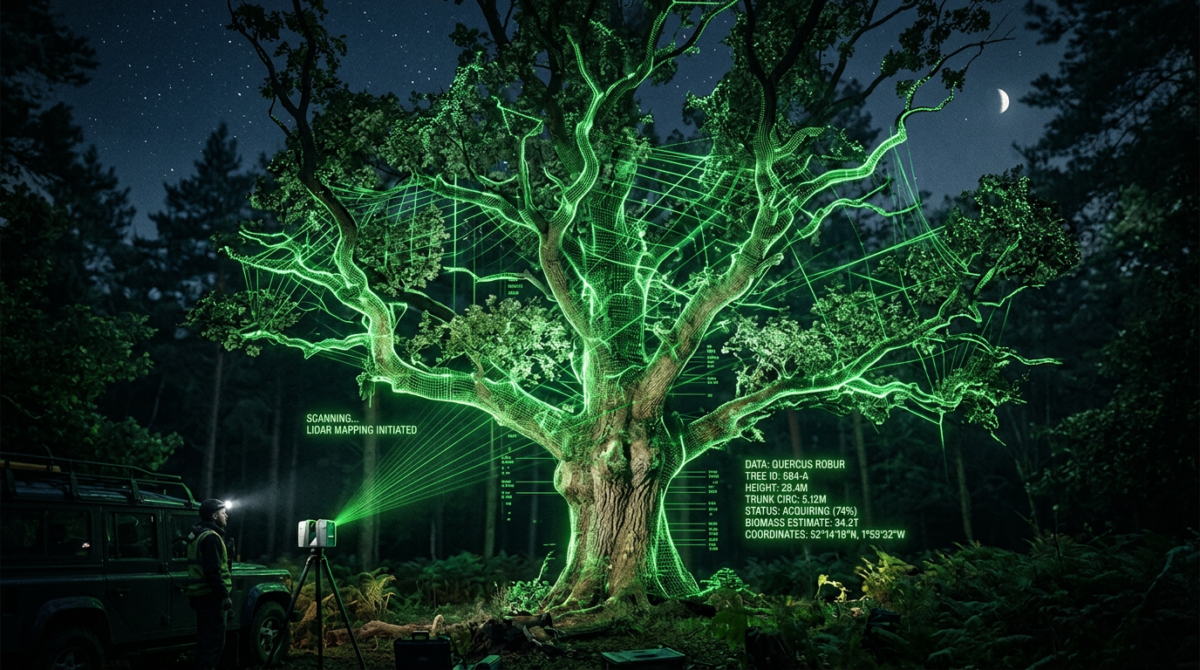
(Agentic Memory and the Digital Passport)
In moving into the workshop, we’re working on a Material-CV tool which performs geometric audits. We know we have 280 staves and exactly enough wide material for four side tables. But in the Salvaged Barrel Studio, we don’t just sell furniture; we sell a story.
To do that, every stave needs more than a measurement. It needs a Digital Passport.
The Stave as a Unique Entity
A barrel is a collective. When it arrives at the studio, it is a single unit. But the moment we pull the hoops, that unit shatters into thirty distinct staves. If we lose the connection between those staves and their origin, we lose the value of the “Sovereign” chain we built during the harvest.
We use a specialized JSON-LD schema to ensure that material memory is never lost. We aren’t just tagging wood; we are tagging a specific individual product. We are tracking a unique ID, like urn:uuid:stave-foch-2022-b4-042, and linking it to the metadata of Vineyard Block #4, the specific 2022 Maréchal Foch vintage, and the physical condition recorded during the initial scan.
Technical Note: If you want the deep-dive on how we design schemas for physical objects—from a pile of rocks to a stack of oak—check out our parallel series: The Backyard Quarry, Part 2: Designing a Schema for Physical Objects.
Tracking the Unpredictable: Labeling the Stave
How do we keep track of 280 pieces of curved oak without losing our minds? We use Agentic Labeling. As each stave passes through the CV scanner, the Scribe assigns its ID and generates a small, discreet laser-etched mark on the joint side of the wood where it will eventually be hidden by glue.
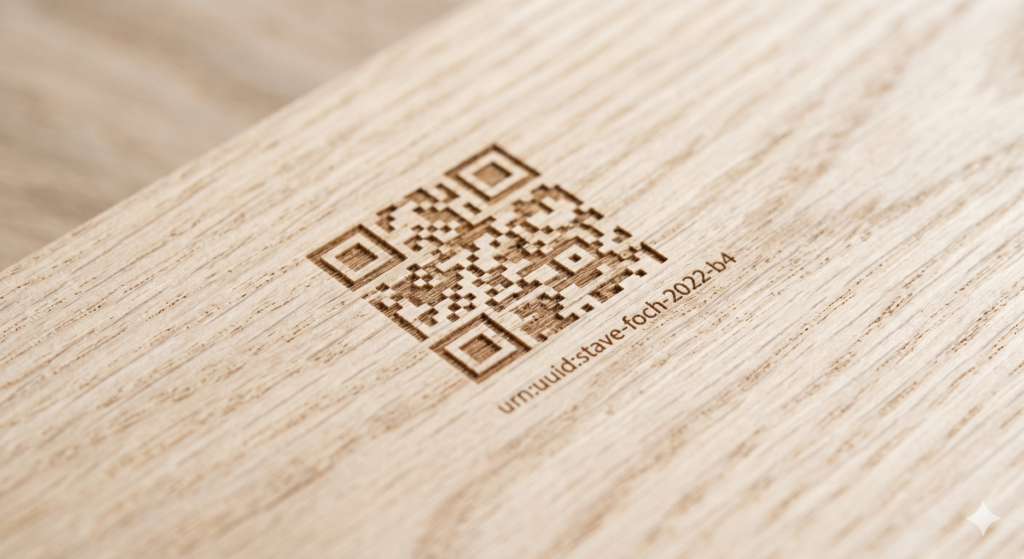
This mark is the anchor for the stave’s biography. It records everything from the “stress fractures” detected in the fiber to the “wine-stain depth” that tells us which side of the oak will provide the most dramatic aesthetic pop.
The Studio Exchange: The Memory Check
This is where the Supply Chain Guardian from our vineyard series shakes hands with the Master Woodworker.
Maker: “Scribe, I am ready to glue up the top for Table #1. I want to use the deep-stain staves from the Foch barrels. Which ones are they?”
Scribe: “I have filtered the inventory. You have 12 staves from the 2022 Foch harvest with a stain-depth greater than 3mm. I have highlighted their locations in Rack B, Section 4.”
Maker: “Wait, I see a hairline crack on Stave #042. Did we miss that?”
Scribe: “Checking the scan history for Stave #042. That fracture was present during the initial breakdown. I flagged it as non-structural at the time. My assessment: Use it for the center of the mosaic top where it will be reinforced by the surrounding joints, but do not use it for a leg-joint or a weight-bearing edge.”
The Digital Passport: Selling the Story
When the table is finished, the material memory doesn’t just disappear into the database. We use the Scribe to generate a Digital Passport for the customer.
By scanning a small mark on the underside of the table, the new owner can see the entire journey. They can see the 18°F frost that triggered the Ice Wine harvest, the cold-chain verification from the delivery truck, and the specific geometry of the staves used to build their piece.
This is no longer just a table; it is a verified, Sovereign artifact. You are selling the truth of the material, backed by the same architecture that saved 140-year-old names in a census ledger.
The Master Woodworker Series (Salvaged Barrel Studio)
- The Master Woodworker (Computer Vision and Material Memory)
- Material Provenance (Agentic Memory and the Digital Passport) – This Post
How are you tracking the life story of your materials? Are you losing your provenance the moment you break down your raw inventory? Reach out on LinkedIn and let’s talk about building a Digital Passport for your craft.