Sovereign Synapse: The Local Brain — First Light

The Local Brain — First Light

A vault of 3,150 Markdown files is just a very organized digital attic. It’s a repository of every conversation, code snippet, and research rabbit hole I’ve navigated with AI over the last two years, but until now, it was static. It was “organized,” but it wasn’t intelligent. To find a specific Movesense API call or a forgotten patent date, I still had to know which box I put it in.

Today, we turn the key. We are moving from mere storage to a private, semantic intelligence estate.

The Engineering Leh Sigh

I call the struggle to reach this point the Leh sigh, that weary, familiar breath you take when a “simple” task reveals its hidden fangs. On paper, building a local semantic search is easy: pick a database, call an embedding API, and save. In reality, it was a 33-iteration battle against the “Last 10%” of systems engineering.

We hit the Context Wall, where massive technical logs crashed the safety limits of our embedding models, forcing us to rethink how we slice data. We fought Zombie Indices, where stale data from old file versions haunted search results, leading us to implement atomic “Delete-before-Upsert” indexing. And we survived a Telemetry Crisis where the database engine tried so hard to “phone home” to its developers that it repeatedly crashed the CLI, requiring a surgical strike to silence the internal trackers.

The Coordinate Map of Thought

To solve these, we built a stack that prioritizes integrity over ease. The centerpiece is Ollama, running the mxbai-embed-large model locally. This is the engine that translates human thought into high-dimensional coordinates.

To ensure no idea was ever cut in half by the model’s token limits, we implemented a sliding window for our data. Before a single vector is saved, the Scribe slices the text into 800-character segments with a 150-character semantic overlap.

def _chunk_text(text: str) -> list[str]:
    """Split text into chunks of CHUNK_SIZE chars with CHUNK_OVERLAP."""
    if not text.strip():
        return []
    if len(text) <= CHUNK_SIZE:
        return [text]
    chunks: list[str] = []
    start = 0
    step = max(1, CHUNK_SIZE - CHUNK_OVERLAP)
    while start < len(text):
        chunk = text[start : start + CHUNK_SIZE]
        if chunk.strip():
            chunks.append(chunk)
        start += step
    return chunks

When a synapse is indexed, we now compute a truncated 16-character SHA-256 content fingerprint hash to serve as our lightweight data-drift indicator. The Scribe is self-aware; if a file hasn’t changed, the system doesn’t waste a single CPU cycle re-processing it. If it has changed, we trigger an atomic update: the old “memories” are wiped, and the new ones are written only if the entire process succeeds. It is all or nothing.

A detailed technical block diagram illustrating the local vector storage indexing pipeline of the Sovereign Synapse system. The workflow reads a Markdown file, extracts YAML frontmatter, and strips conversational prose tax. The remaining body content passes through a content-hash check: if the 16-character SHA-256 fingerprint matches an existing entry, the index process skips it to avoid duplicates. Unmatched data proceeds to a sliding-window text chunker (800-character blocks with 150-character overlaps). Each chunk hits an Ollama embedding loop; if it triggers a status 400 error due to dense logs, a fallback loop applies a hard 500-character truncation before retrying. Once all embeddings succeed, an atomic 'delete-before-upsert' transaction executes, safely removing the collection's old UUID records before bulk writing the new vector batch into local ChromaDB storage.

The Payoff: Semantic Spotlight

The result is what I call “First Light”—the moment the machine actually understands the intent of a query. By searching across what has now become 12,400 semantic chunks, the Scribe pulls the needle from the haystack in under three seconds.

# Querying two years of research in 2_The_Prose_Tax.8_Forensic_Receipt seconds
python3 main.py query "Movesense calibration" --n-results 1

🔍 Top 1 match for: Movesense calibration

--- Result 1 ---
Timestamp: 2025-06-20 07:07
Snippet: It sounds like rolling my own would indeed be the best option, plus if I'm working 
         directly with therapists they might have some insights into what specific 
         information would be valuable for their clients...
File: vault/synapses/2025-06-20-0707-rolling-my-own-logic.md

This isn’t keyword matching. The system found this result because it understood the concept of building a custom calibration tool for clinical use, even though the word “calibration” only appeared in the broader file context.

The Sovereign Architecture

As the vault grows, the relationship between my data and my hardware becomes the ultimate bottleneck. By running embeddings on-device, my queries never leave the local network.

Privacy isn’t a setting; it’s the architecture.

Storing the index on a high-performance NVMe ensures that the “latency of thought” remains sub-second, even as the estate expands. The foundation is set: 3,150 synapses, 12,400 semantic vectors, and not a single byte sent to the cloud.

We have moved from a digital attic to a living cognitive estate, where the value of the data isn’t just in its existence, but in its accessibility.

But a brain that only remembers the past is just a library. To truly act as a collaborator, the Scribe needs to do more than find information—it needs to synthesize it. In Phase 2, we stop looking backward and start building the future. It’s time to let the Scribe talk back.

How do you handle the “digital attic” problem in your own workflow? Is your data working for you, or are you just storing it?

The Sovereign Synapse Series

Facebooktwitterredditlinkedinmail

The Local Eye (Sovereign Vision)

We’ve built a system that is Reliable, Affordable, and Governed. But until now, our Forensic Team has been “blind.” It could only reconcile text-based metadata.

In the world of rare book forensics, the text is only half the story. The typography, paper grain, and binding texture are the true “fingerprints.” However, sending high-resolution, proprietary scans of a $50,000 asset to a cloud-based LLM is a Data Sovereignty nightmare.

Today, we introduce The Local Eye: Edge-based Multimodal Vision that processes pixels without letting them leak into the cloud.

The Sovereignty Gap in Multimodal AI

Most multimodal implementations send raw images directly to frontier models (like GPT-4o). For an enterprise, this is a liability.

  1. Intellectual Property: Who owns the training data rights to the scan?
  2. Privacy: Does the image contain metadata or background information that violates NDAs?
  3. Cost: Sending 10MB 4K images for every query is an “Accountant’s” nightmare.

Implementing “Feature Extraction” at the Edge

Instead of sending the image to the cloud, we use Llama 3.2 Vision running locally via Ollama. Our MCP server acts as an “Airlock.”

The Handshake:
Normalization: The sharp library resizes and standardizes the forensic scan locally.
Local Inference: The Vision SLM analyzes the image and generates a text-based “Feature Map.”
Metadata Egress: Only the textual description is passed to the reasoning agents. Even if The Accountant routes the task to a Cloud model for deep analysis, the cloud only sees our description, never the pixels.

Architectural diagram of the 'Local Eye' workflow. An artifact image is processed locally using the Sharp library and Llama 3.2 Vision. Only the resulting text metadata is allowed to pass through the security airlock to cloud-based reasoning models, ensuring the original pixels never leave the local environment.
The Sovereign Vision Workflow—Extracting intelligence at the edge to prevent data leakage.

The Sovereign Vision Workflow—Extracting intelligence at the edge to prevent data leakage.
Architectural diagram of the 'Local Eye' workflow. An artifact image is processed locally using the Sharp library and Llama 3.2 Vision. Only the resulting text metadata is allowed to pass through the security airlock to cloud-based reasoning models, ensuring the original pixels never leave the local environment.

In code we might have something like this then:

// From src/index.ts: The Vision Airlock
async function analyzeArtifactVision(imagePath: string, focus: string) {
  const processedImage = await sharp(imagePath).resize(512, 512).toBuffer();

  // Local-only call to Ollama
  const description = await ollama.generate({
    model: 'llama3.2-vision',
    prompt: `Analyze the ${focus} of this artifact.`,
    images: [processedImage.toString('base64')]
  });

  return description; // Pixels stay here. Only text leaves.
}

The “Zero-Pixel” Policy

The goal is to maximize Intelligence while minimizing Exposure. By implementing Local Vision, we treat the cloud as a “Reasoning Utility,” not a “Data Store.” We send it the logic puzzle, but we never give it the raw forensic evidence. We gain the power of frontier-model reasoning without the risk of data harvesting.

Developer Lessons: The “Latency of Locality”

In building the Sovereign Vault, we learned that ‘Data Sovereignty’ has a physical cost: Time.

While a cloud-based API might analyze a 4K image in seconds, running a deep-dive OCR and visual analysis on local consumer hardware using Llama 3.2-Vision takes significantly longer. We had to tune our “Airlock” timeouts—raising the ceiling from 120 seconds to 300 seconds—to give the local “Eye” enough time to process complex handwriting on a standard CPU.

Additionally, we realized that our error logs were a potential privacy leak. We implemented Log Truncation to ensure that even our failures respect the Sovereign Vault’s privacy mandate.

The “Zero-Glue” Discovery

In a traditional setup, adding vision would require rewriting the orchestrator’s core logic. Because we use the Model Context Protocol, the orchestrator simply asked the server: “What can you do?”. The server replied with the analyze_artifact_vision manifest. The agent then dynamically decided to use this new “Eye” to investigate the Gatsby image. No new glue code was written to connect the vision model to the reasoning brain.

Case Study: The Gatsby Inscription

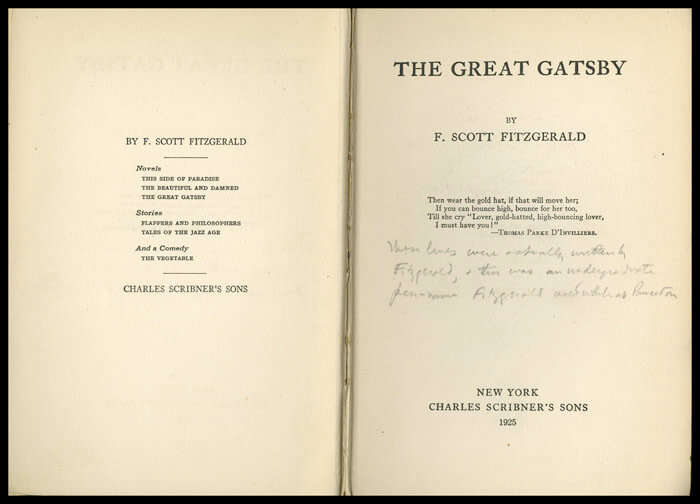
To test our Sovereign Vault, we ran a forensic audit on a high-value first edition of The Great Gatsby. Our local Vision Agent detected something anomalous on the title page: a cursive, multi-line inscription.

An image of The Great Gatsby copyright page
Image credit: [University of Southern Mississippi Special Collections](https://lib.usm.edu/spcol/exhibitions/item_of_the_month/iotm_june_2021.html) (June 2021 Item of the Month)

The Sovereign Trace

When we ran the analyze_artifact_vision tool, the local Llama 3.2 Vision model performed a deep scan and returned a fascinating finding:

**Visual Findings: Handwritten Inscription**
* Location: Right-hand margin of title page
* Medium: Faint pencil, cursive script
* Transcribed Content: "Then we are not alone at all when we remember that we have in our hearts that something so precious..."

Why this matters: Notice that the model didn’t just see “scribbles.” It attempted to transcribe a 40-word passage. Crucially, the Forensic Analyst (Claude) recognized that this text does not exist in any canonical version of The Great Gatsby.

This is a massive forensic win. The “Eye” identified a potential fabricated provenance or a non-standard owner intervention. Because this happened inside our “Airlock,” the specific handwriting and the non-canonical text were captured without ever touching a cloud API.

The Architect’s Trade-off: The Reasoning Gap
While our local Llama 3.2-Vision is an incredible “Eye,” it occasionally faces a Reasoning Gap. In certain runs, it may identify a note as “illegible” or produce repetitive output due to CPU thermal throttling or model constraints.

Instead of hallucinating a “clean” signature, our system is designed to Safe-Fail. It flags the finding as “Indeterminate” and triggers a High-Severity Human Authorization request.

The Governance Challenge: We now have a transcribed inscription that might contain a previous owner’s private thoughts or names. If we simply passed this output to an LLM for summarization, we would have leaked a private message to a third-party server. This discovery sets the stage for our next architectural layer: The Redactor.Facebooktwitterredditlinkedinmail