In July of 1776, an experimental political concept was ratified on the extreme edge of the known geopolitical world. It was a declaration that governance belongs at the local perimeter, that centralized authorities separated by massive physical latencies are structurally unfit to dictate local operations, and that true autonomy requires independent record-keeping.
As we approach America’s 250th birthday, a remarkably similar battle is playing out across our global computational geography.
For the past decade, the tech industry has willfully surrendered its architectural sovereignty to centralized cloud empires. We have been told that our applications are nothing without an unbroken connection across the ocean to a hyperscaler’s data center. We have been conditioned to accept that if the central cloud goes offline, our peripheral operations must grind to a halt.
The Sovereign Systems Specification was built to break that dependence. And this week, after multiple rounds of attrition against the realities of edge computing, we have officially stabilized and shipped the foundational bridge for off-grid data custody: sovereign-sdk-edge and sovereign-sdk-sensor, alongside a fully unified v1.3.0 workspace release.
Here is the forensic anatomy of how we forged an industrial-grade local data fortress, and why local sovereignty is the only path forward for high-assurance systems.
The Frontier Cannot Rely on the Crown
Every sovereign record must begin somewhere.
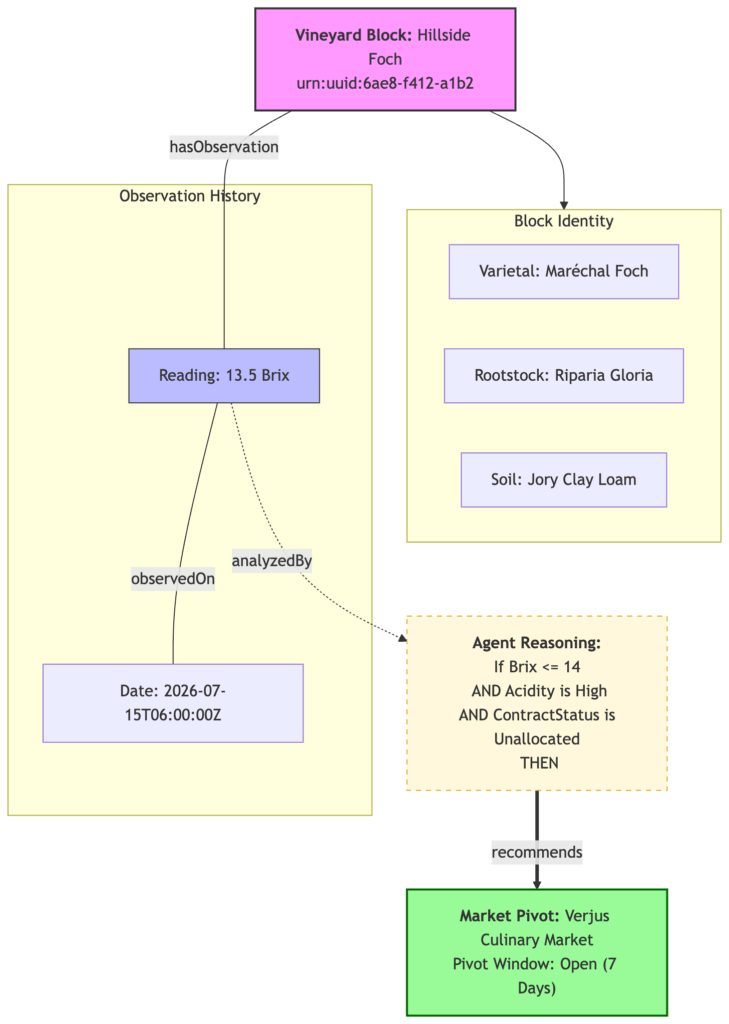
The introduction of sovereign-sdk-sensor establishes custody at the Point of Genesis—the precise moment a physical event becomes a digital artifact. Whether the source is a temperature probe, a voltage reading, or a machine-state transition, Sensor seals the event before it crosses a network boundary, enters a queue, or becomes subject to external influence.
Only then does sovereign-sdk-edge assume responsibility for preserving that evidence across unreliable infrastructure.
When you operate hardware on the physical edge—whether it’s a manufacturing floor, an IoT sensor array, or an isolated developer workstation—network connectivity is a luxury, not a guarantee.
If an edge node captures critical telemetry or a signed cryptographic proof, and the primary ledger is unavailable due to an outage, dropping that data is an operational failure. But blindly caching it in volatile memory is equally negligent.
To solve this, sovereign-sdk-edge implements an Asynchronous Off-Grid JSONL Buffer backed by an HMAC-Gated Ingestion Bridge. It ensures that if the centralized ledger goes dark, data is cleanly parsed via strict model version gates, transformed through local telemetry sieves, and written into a durable on-disk journaling file.
But building a local buffer that actually survives the violent physics of the edge is an entirely different beast. To achieve the level of reliability demanded by edge infrastructure, we put the codebase through an exhaustive code review gauntlet.
We didn’t just design for the happy path; we engineered for the catastrophe.
Forensic Anatomy of the Engineering War
To guarantee that no packet is ever dropped, duplicated, or corrupted during a system failure, our architecture had to be hard-coded against low-level disk anomalies and concurrency race windows. Here are the core architectural battles we fought and won:
1. The Two-Phase Commit Teardown Race
During a recovery pass, when the off-grid buffer replays saved logs back to the primary ledger, any entries that fail must be re-queued safely back into the active queue. Early iterations called flush() and immediately deleted the temporary .staging file.
- The Blast Radius: If the disk filled up or hit an
OSError during that exact millisecond, the background worker shunted those records into an in-memory error tracking array. Because the worker “handled” the error, flush() returned successfully, and the system deleted the .staging backup. A power loss a millisecond later permanently vaporized the data.
- The Sovereign Fix: We hardened
commit_drain() to explicitly inspect internal volatile buffer states. If any record shifts to an in-memory error list or a background thread experiences a hiccup during flushing, the commit unlinking path is immediately aborted, preserving the on-disk .staging log for a future clean recovery pass.
2. The Volatile Write-Error Ghost Window
When executing a queue drain when the primary active log file was missing, the recovery thread would read the local .quarantine log, write it to .staging, and yield the items.
- The Blast Radius: While the on-disk quarantine text was mirrored to disk, the volatile, in-memory
_write_errors array entries were returned for processing without ever being physically appended to the .staging cleanup file. A crash window existed where restart recovery would look at an incomplete staging file, orphaned from its volatile state.
- The Sovereign Fix: We updated the
drain() matrix to force full, synchronous serialization of both the on-disk quarantine logs and the volatile in-memory error snapshots into a unified, physical .staging artifact before any transactional logic yields.
3. Overlapping Lifecycle Lock Interleaves
In high-throughput environments, multiple concurrent threads can attempt to trigger a pipeline recovery pass.
- The Blast Radius: While counter math was protected by an execution lock, the file unlinking mechanisms in
commit_drain() were separate from the active file shuffling in drain(). Thread B could execute a clean commit and delete the shared .staging path right as Thread A rotated the active files but before Thread A actually processed the yielded items.
- The Sovereign Fix: We aligned the execution gates. The entire cleanup lifecycle of
commit_drain() is now bound to the exact same high-level operational synchronization lock used by drain(), completely eliminating concurrent file-clearing race windows.
Ratifying the New Union: The sovereign-sdk-* Namespace
As these edge modules matured into industrial infrastructure, our own project layout faced a structural crisis reminiscent of the early American Articles of Confederation. We had a collection of fragmented packages (sovereign-core, sovereign-ledger, sovereign-sieve) operating under loose structural bounds.
To establish a more perfect architectural union, we executed a sweeping namespace migration alongside our edge release.
As of today, all core packages have been unified under the official sovereign-sdk-* distribution space on PyPI, completely locked to a normalized baseline version of 1.3.0.
For our existing production users, we have deployed a seamless migration path. The historical package names (sovereign-core, sovereign-ledger, etc.) have been updated to clean, code-free metadata wrapper envelopes. Running a dependency update on your legacy configuration will automatically and safely forward your package manager to pull down the newly scoped sovereign-sdk-* equivalents without requiring you to rewrite a single internal Python import string.
The Next Boundary
With v1.3.0, the Sovereign SDK now establishes custody at the point of origin, preserves evidence through durable local ledgers, and maintains operation across intermittent network conditions.
But sovereignty is not solely an ingestion problem.
Modern systems spend enormous effort controlling what enters their perimeter while giving comparatively little thought to what leaves it.
Every day, developer tools, autonomous agents, and enterprise applications transmit vast amounts of context across organizational trust boundaries to increasingly capable external systems. Most organizations can tell you where their data is stored. Few can tell you precisely what was transmitted, why it was transmitted, whether it could have been reduced, or what that decision ultimately cost.
The next phase of the Sovereign Systems Specification will focus on this outbound boundary.
Not on blocking innovation.
Not on replacing frontier models.
On understanding the economics, provenance, and governance of data once it prepares to leave a sovereign perimeter.
The same questions that shaped write-side custody now apply in reverse:
- What is leaving?
- Why is it leaving?
- How much of it is actually necessary?
- What evidence should remain behind?
Those questions will guide the next chapter.
The code is live. The architecture is battle-hardened. The declaration has been signed.
Go explore the unified sovereign-sdk v1.3.0 workspace on GitHub, pull down the new edge modules from PyPI, and claim your independence from the crown cloud. 🚀🔒